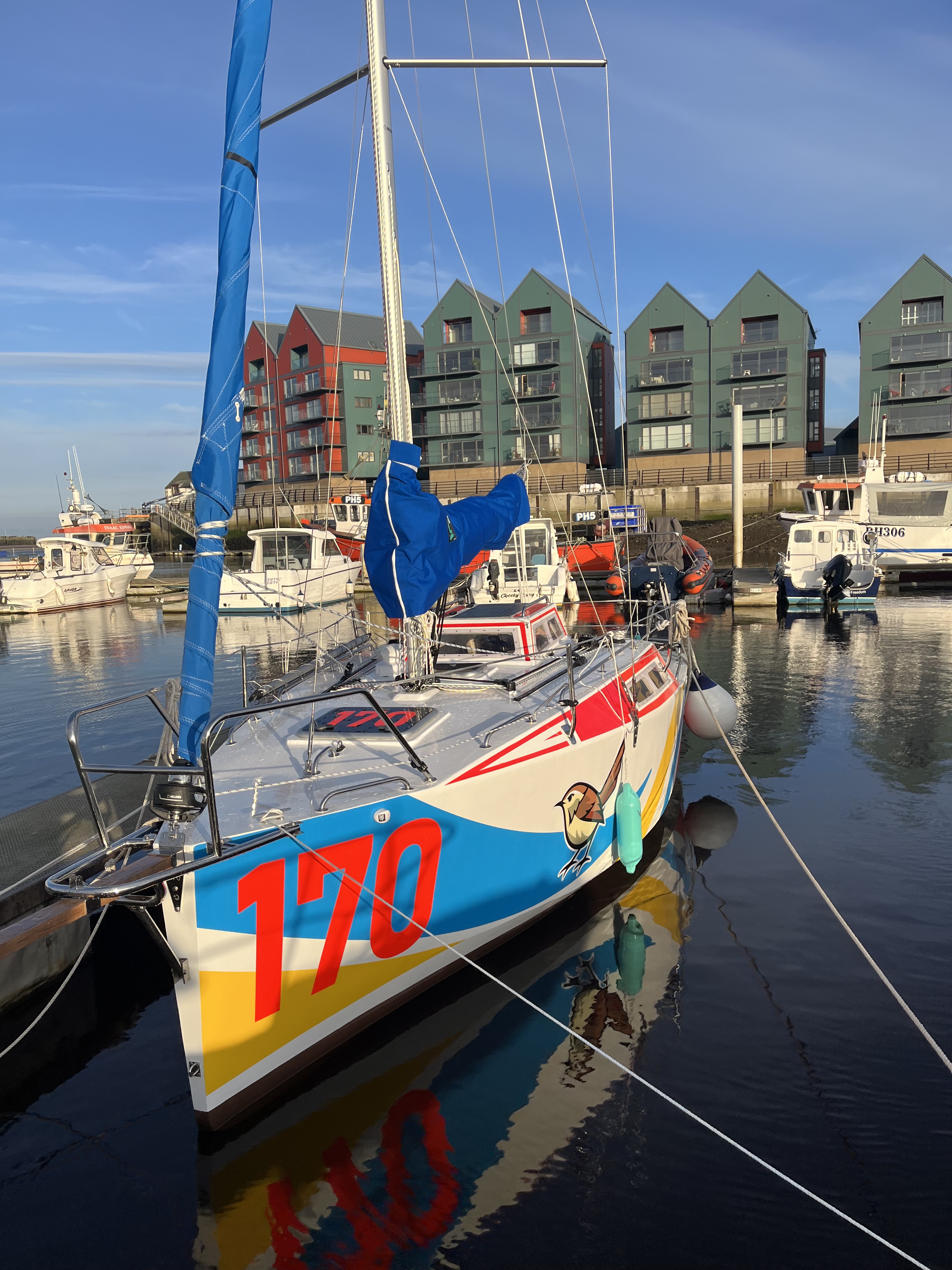
Stage 4: Glassing & Fairing
Once I’d finished the boarding I thought the process of putting on fibreglass would be a quick job…It wasn’t! In all honesty, I found this phase quite difficult and couldn’t wait for it to be over. It didn’t help that the temperature in my workshop dropped to -3 degrees.
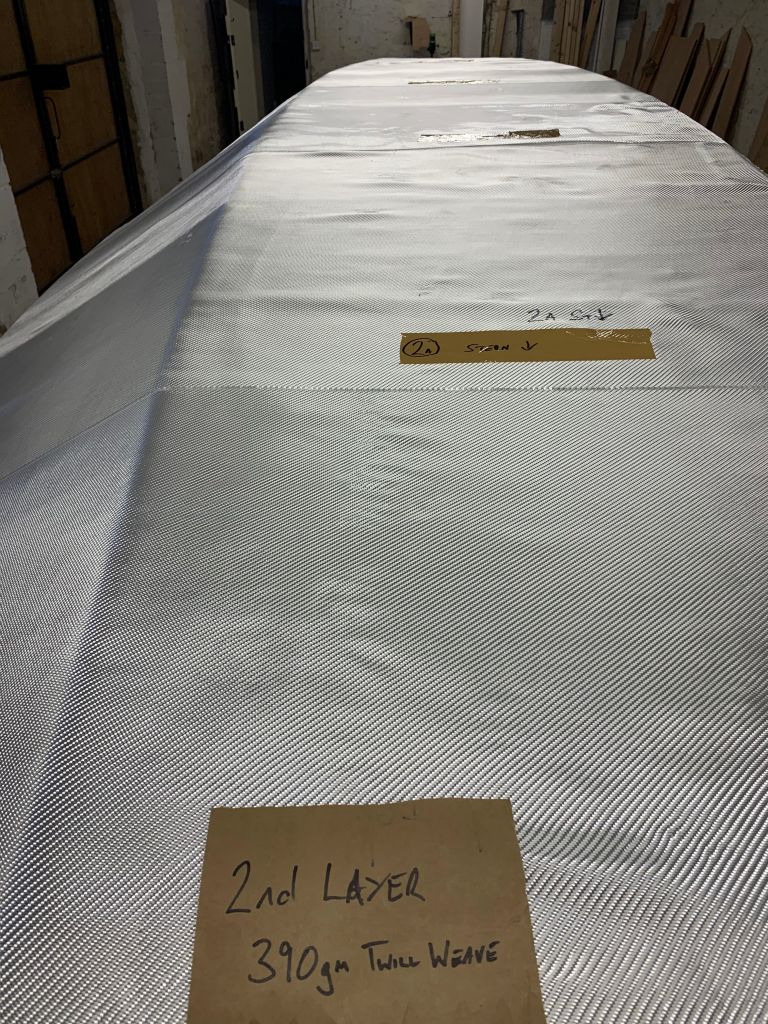
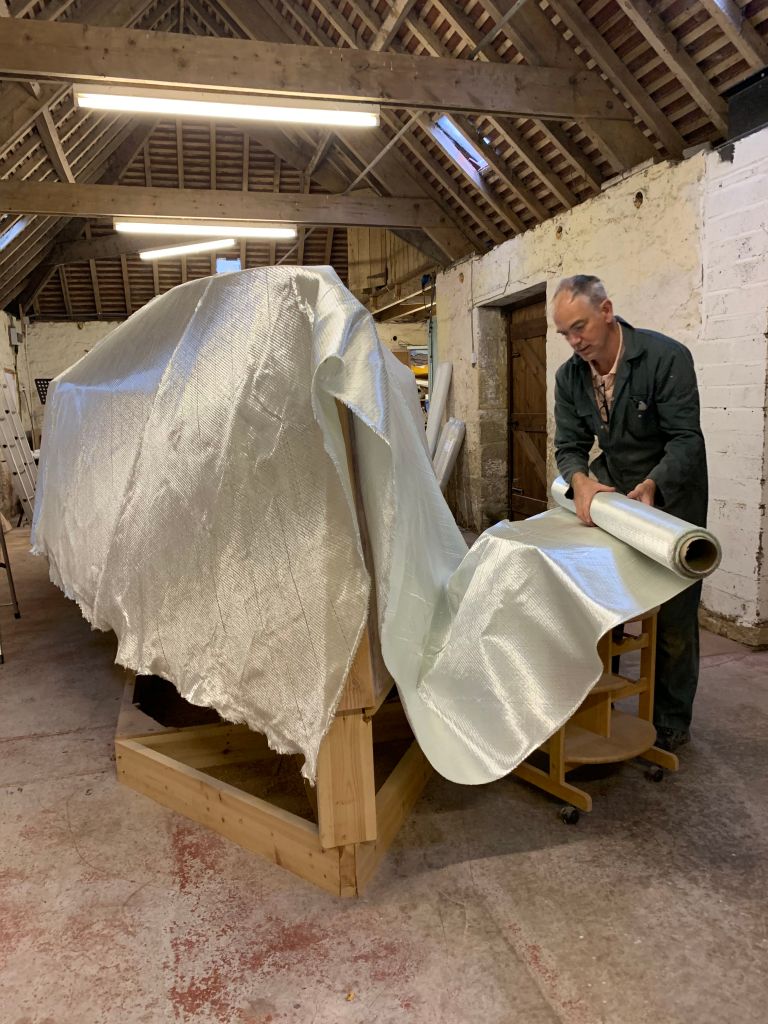
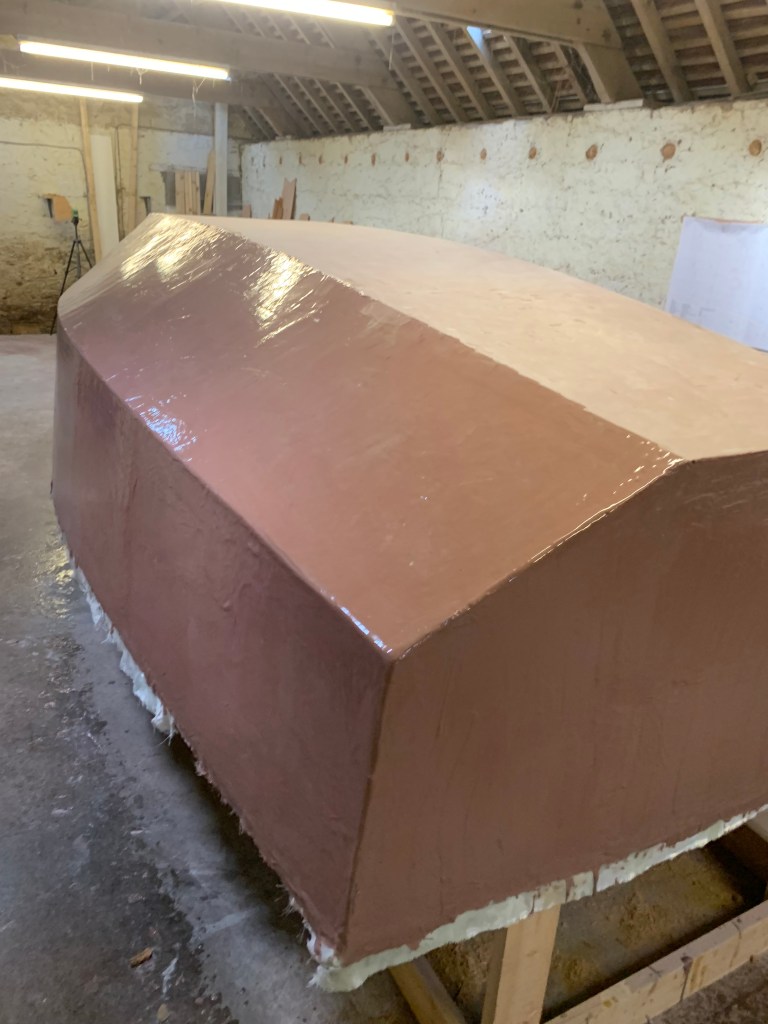
I used 600gm biaxial as the base layer followed by 390gm twill weave and finally 200gm twill weave. Each layer was cut out and dry fitted in an operation which was more like a tailor’s shop than a boat builders shed. I had a full day’s help from Stephen, Nick and Chris to finally fit the three layers. Thank you!
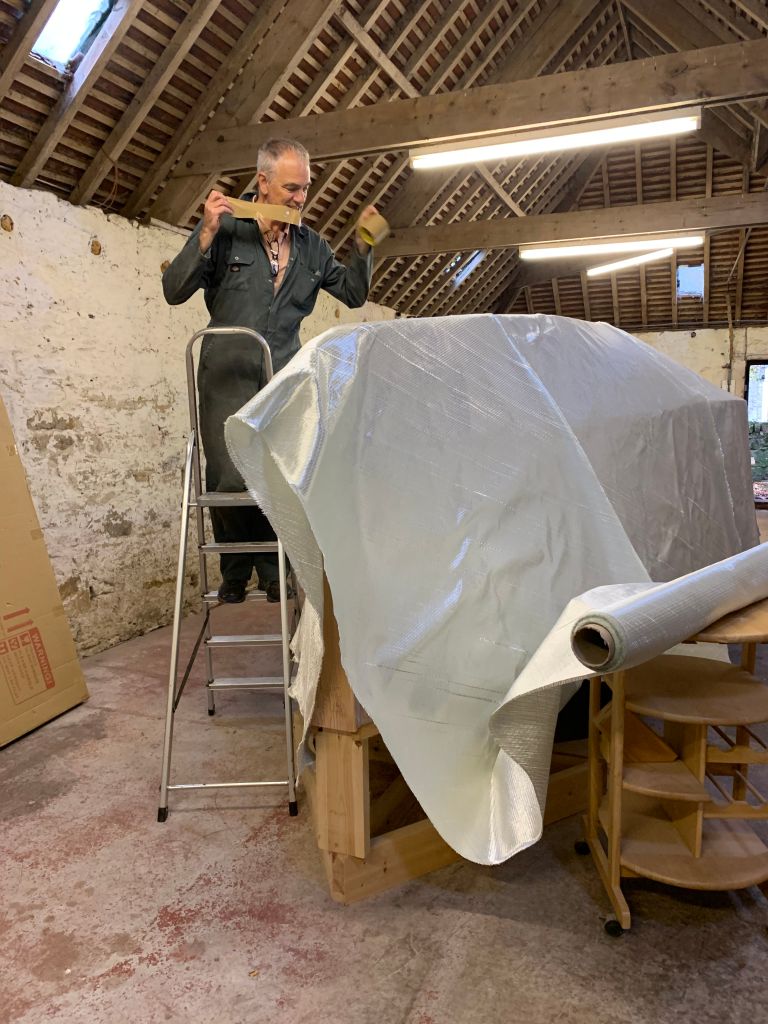
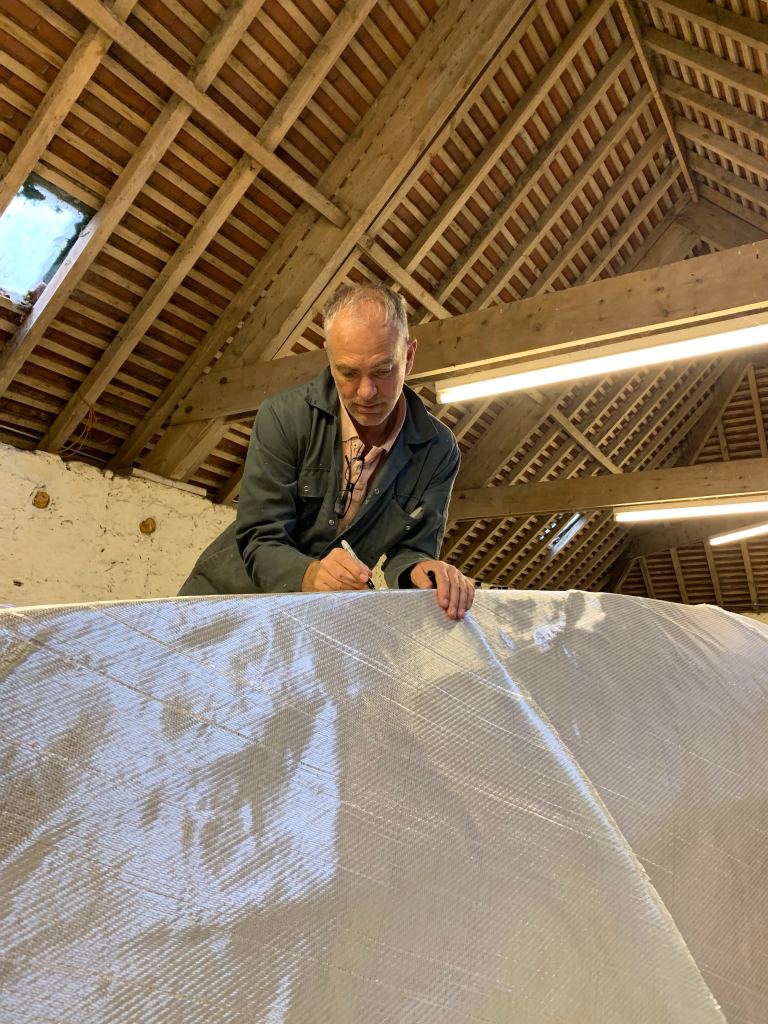
Helpful friends & unhelpful dogs

Each layer needs to be laid over an epoxy wetted hull then drenched in epoxy to bond it to the hull. Once that process was done then the next layer starts. I was mixing small quantities of epoxy (resin and hardener) whilst the other three did the hard work. It didn’t help that my dogs nicked off to go hunting which delayed our start by 3 hours and meant we were too late to adjourn to the pub.
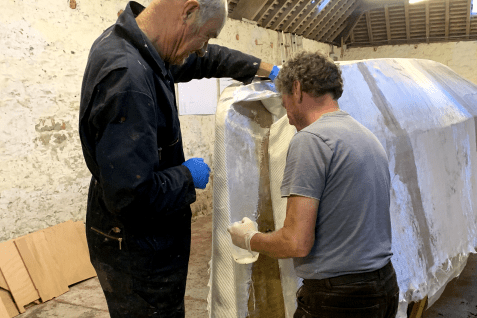
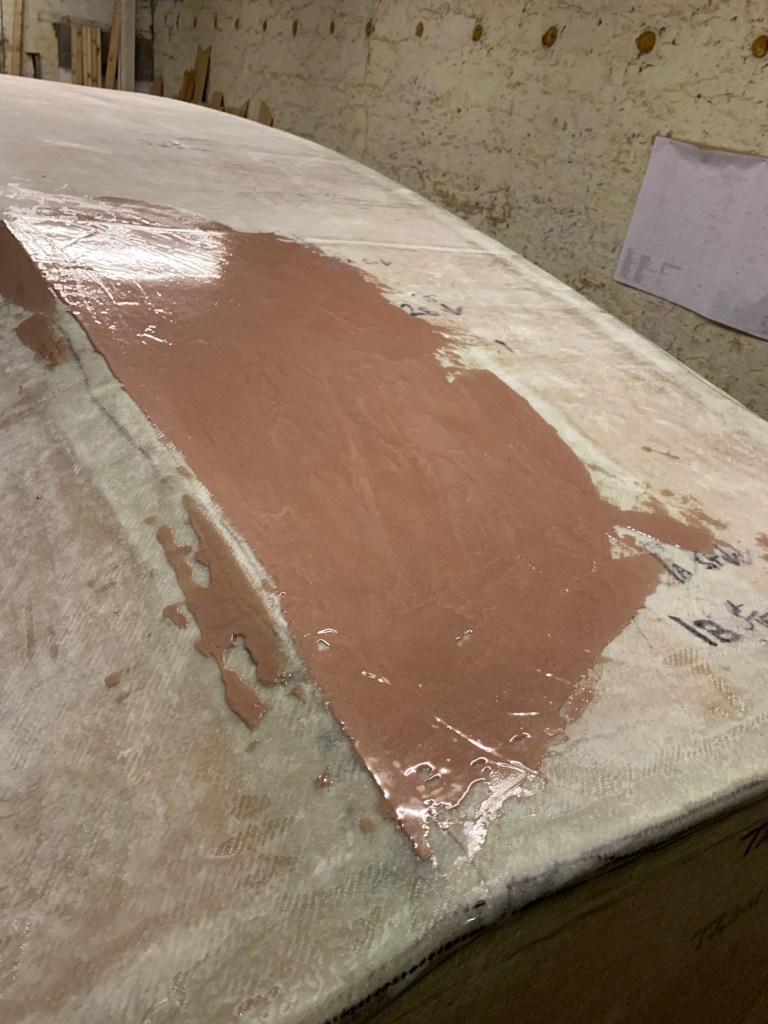
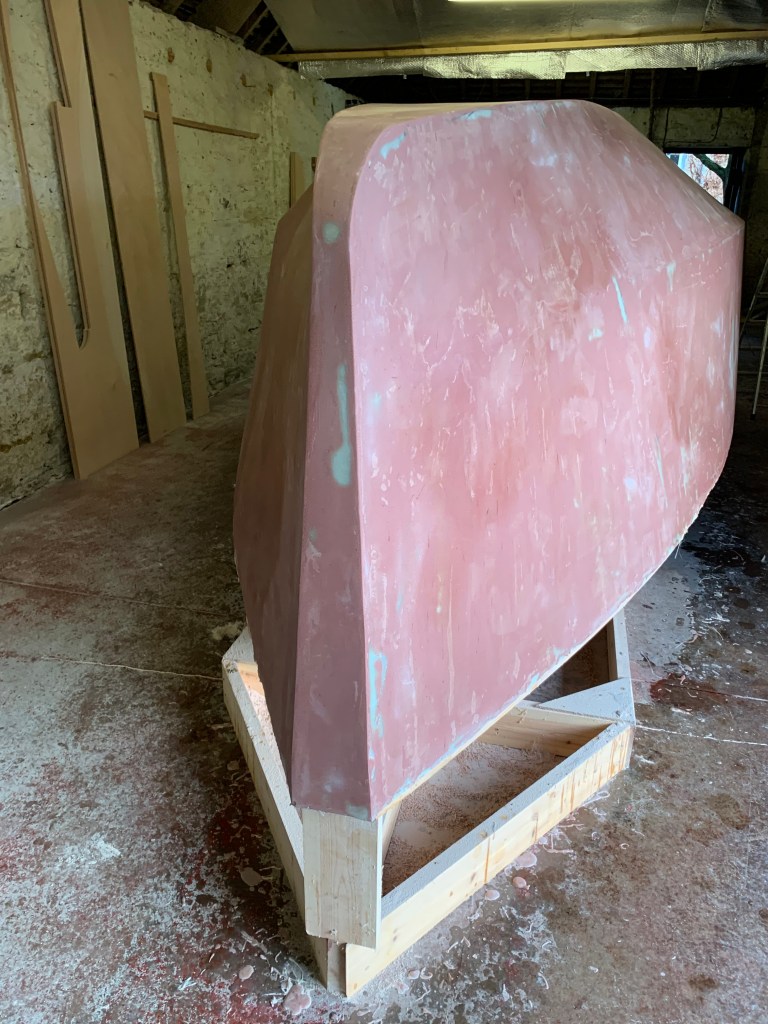
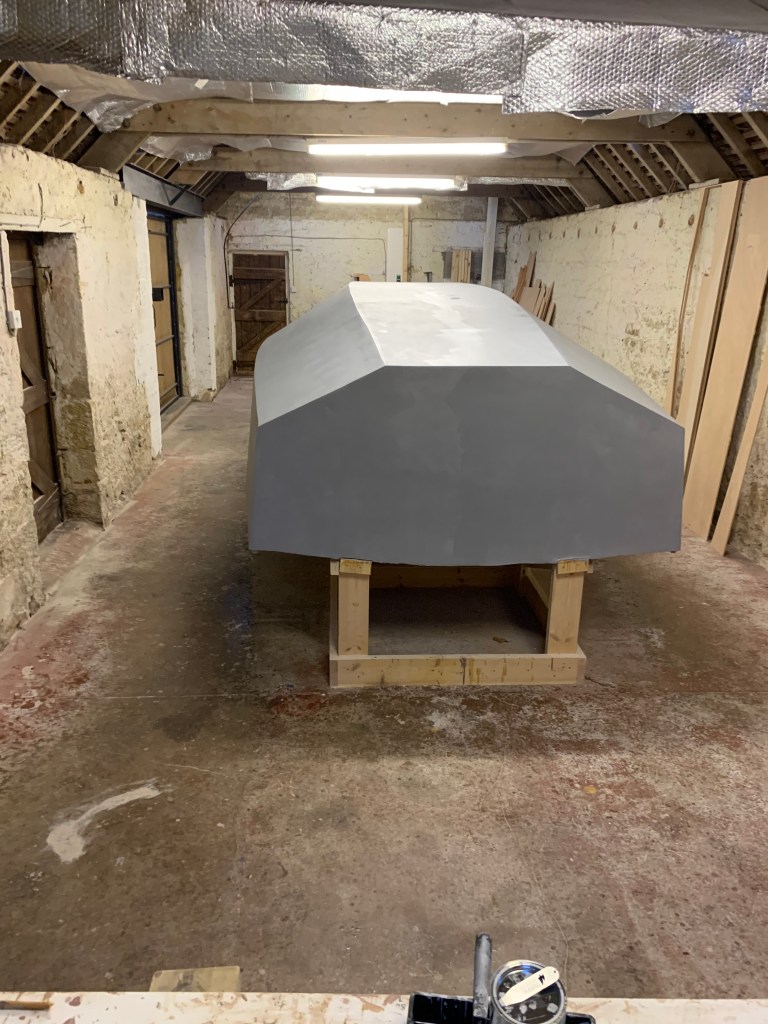
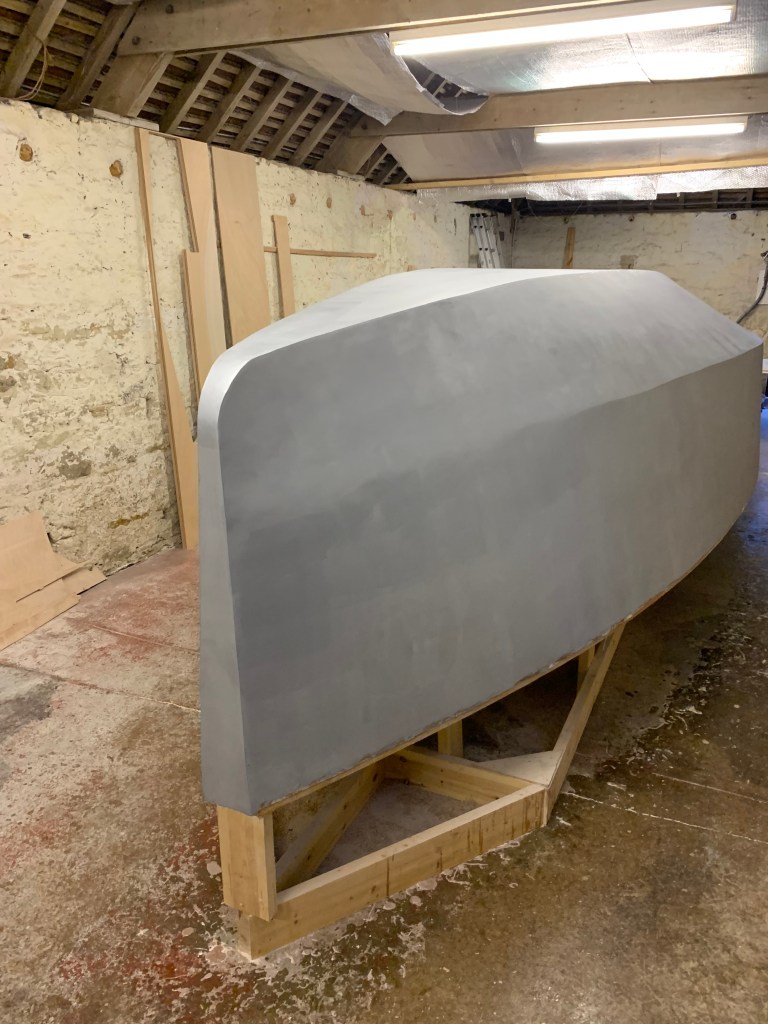
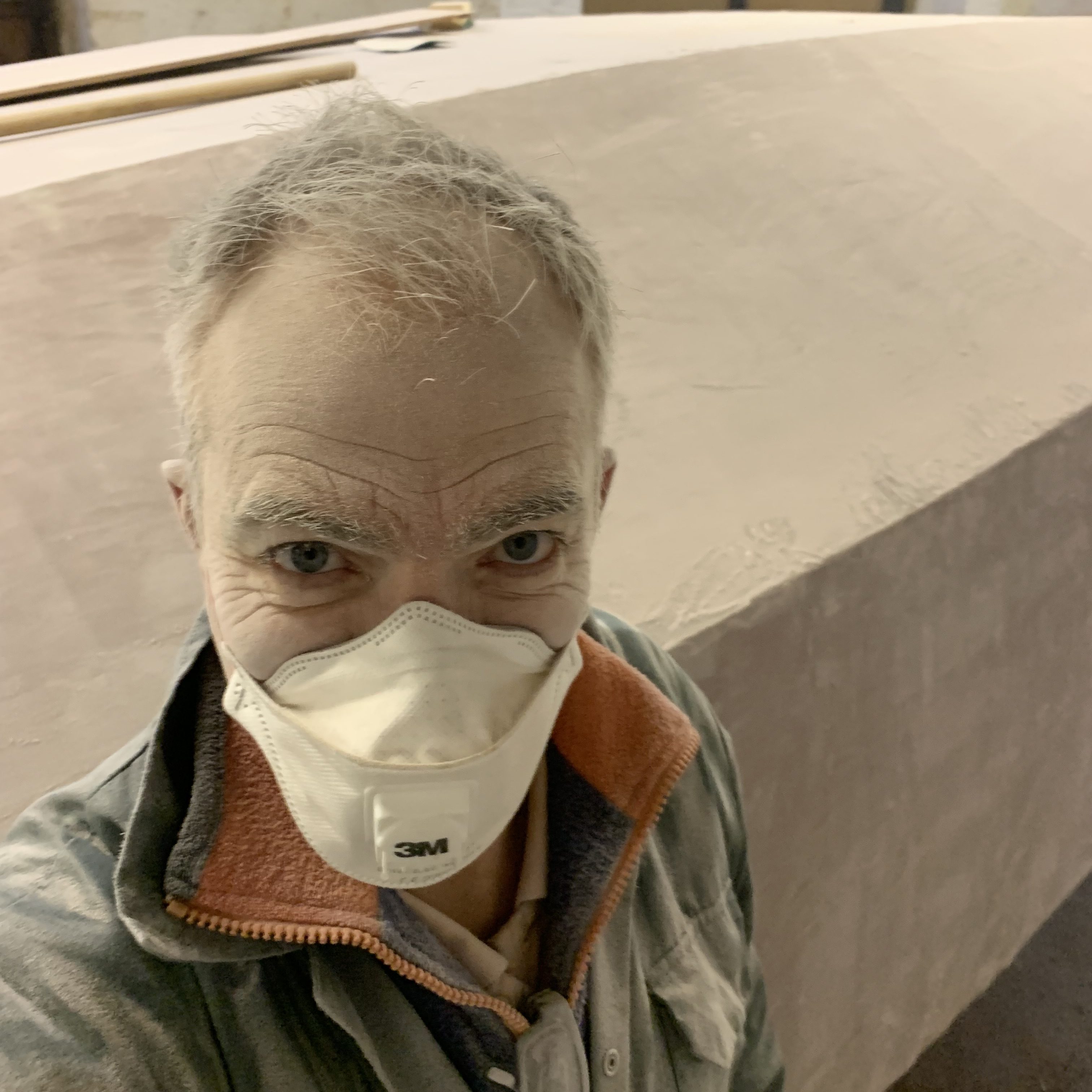
I used West System for this phase and 407 fillers for the fairing. Fairing is where you put on a thin layer of thickened epoxy, let it dry, then spend days and days sanding it all off again. It took a long time. I used some electric sanders with 40 and 80 grit paper then a long board. After three separate applications of fairing compound, reducing in quantity each time, it was done. I put on 3 coats of Seajet 117 primer as the last step in this phase.

 ClearBlueSea
Leave a comment